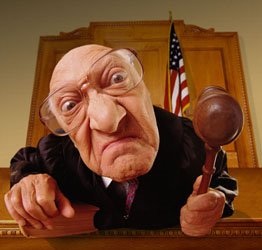
In the meantime, here are some funny gifs
Tuesday, September 2, 2014
How to Expunge a Record in Utah (Part 2: Filing forms)
OOPS! Part 2 of "How to Expunge a Record in Utah" is currently being written.
In the meantime, here are some funny gifs
How to Expunge a Record in Utah (Part 1: Eligibility).
EXPUNGEMENTS ARE EASY. Here are the steps and websites you will need to expunge your record, misdemeanor or infraction, in Utah.
First, the basics:
So by expunging your criminal record, you make it unavailable to the public. Any background check by an employer, school, or private company will not show your record. (Pretty cool right!?)
| Justin Bieber obviously needs an expungement. |
What can be Expunged?
Two types of records can be expunged: a non-conviction record, and a conviction record. (Conviction includes a verdict or finding of guilty after trial, a plea of guilty, or a plea of nolo contendere (no contest)).
Non-Conviction: In Utah Code, Section 77-40-104, you can expunge records of arrest, investigation, and detention for a crime when there is no conviction, IF:
- 30 days have passed since the arrest;
- there are no criminal cases pending; and
- one of the following occurred:
- no charges were filed;
- charges were filed, but the case was dismissed with prejudice;
- charges were filed, but the person was acquitted at trial; or
- the statute of limitations has expired.
(More Information HERE)
Conviction: Conviction records can be expunged unless the conviction is for:
- a capital felony, first degree felony or violent felony;
- automobile homicide;
- felony driving under the influence; or
- a registerable sex offense;
Also, a person cannot expunge records of any conviction if:
- the petitioner has been convicted in separate criminal episodes of:
- two or more felonies;
- three or more crimes of which two are class A misdemeanors;
- four or more crimes of which three are class B misdemeanors; or
- five or more crimes of any degree other than infractions and the traffic offenses identified in Section 77-40-102.
Lastly, for convictions, a person cannot expunge a record unless the statutory time has passed since the latest of the conviction, release from incarceration, or probation.
Here is a chart found on Utah State Courts website showing the amount of time that must pass before you can expunge a record:
Offense | Time from date petitioner was convicted or released from incarceration, probation or parole, whichever occurred last |
| Misdemeanor conviction of Subsection 41-6a-501(2) Felony conviction of Subsection 58-37-8(2)(g) | 10 years |
| Felony | 7 years |
| Class A Misdemeanor | 5 years |
| Class B Misdemeanor | 4 years |
| Other Misdemeanor or Infraction | 3 years |
Applying for Eligibility:
Once you determine for yourself that you might be eligible, you must obtain a Certificate of Eligibility (publicsafety.utah.gov) issued by the Bureau of Criminal Identification (BCI - publicsafety.utah.gov) of the Utah Department of Public Safety.
Here is the form to fill out and send into the BCI. The application fee is $50.00 and requires fingerprinting.
Once BCI performs a records check and determines that you are eligible to expunge criminal records, the certificate is valid for only 90 days from the date issued.
Friday, August 29, 2014
How to Beat a Speeding Ticket in Utah
What you need to know to win:
1. The radar gun must be tested to be admissible against you.
The State of Utah requires that any radar gun used to track speed must be tested BEFORE and AFTER the police officer's work-day. Although most police stations have daily routines that accomplish this, they can make mistakes. You should verify that the gun was tested.
2. There must be PROOF of speed offered.
The prosecutor must prove that your vehicle was traveling at a certain speed. It is not enough to claim that you were traveling within a certain range (unless that range is the small margin of error by a radar gun). The prosecutor must offer the calibration certificate of the radar gun to prove this. A valid certification must be: 1. tested within the 6 months prior to the date of speeding; 2. acknowledged by the writing officer; and 3. an original copy.
3. There must be constructive notice of the speed limit.
The prosecutor must prove constructive notice, not actual notice. Constructive notice does not mean that you didn't see the sign. It means that the sign was obstructed from view in some way, or non-existent. You should take photographs of the sign and the way it appeared to you on the day of the incident.
These are the most common forms of challenging a speeding ticket. They are a great start on your defense against a speeding ticket in Utah.
See Disclaimer page.
- Here is a short video from an attorney giving further general advice:
Thursday, April 17, 2014
Guilty Plea v. No Contest (Alford Plea)
THE LAW
On a basic level, a plea deal by the prosecutor will usually serve two purposes: 1. the prosecution gets to settle the case before a lengthy trial, which frees their schedule and avoids court costs. And 2. the defendant gets a lesser charge and/or sentence.
A GUILTY PLEA
For a guilty plea, the defendant is asked how to confess his guilt before the court. The prosecutor will then state the general facts of the case, which the defendant is assumed to agree with. You can and should ask what those facts are going to be. You can negotiate with the prosecutor to edit the facts. (this is helpful for any civil cases that might follow)
NO CONTEST PLEA
A no contest plea is also called an Alford Plea, named after the famous case North Carolina v. Alford. By pleading "no contest," you are asserting your innocence but accepting that the prosecutor has enough evidence against you to likely convince a jury that you are guilty. This can prove helpful when there is a subsequent civil lawsuit.
Sounds good right? But there is a unforeseen problem. Like it or not, your sentencing judge may not enjoy a no contest pleas. Many judges follow the notion that "No Contest pleas" undermine the trust in the judicial process. Specifically, Alford pleas can give off the perception that innocent people often plead guilty.
Even more troubling to a judge is that an Alford plea allows guilty defendants to avoid accepting responsibility for their wrongs. It is much easier for a judge to justify a lesser sentence for an repentant criminal than an unrepentant one.
Some believe that an Alford plea cannot be used in the court of future crimes or that when applying to jobs an Alford plea is not reported. FALSE! For future crimes, the guilty plea may or may not be used against the defendant, depending on the court that presides over the future crime. When applying for a job, the defendant is obligated to disclose that he/she has “plead guilty” to a crime.
So remember, Alford pleas, a.k.a "no contest" pleas, are good in only a few circumstances, BUT they can cause the judge to begin sentencing with a bad taste in his mouth. An angry judge is a lot harder to convince than a sympathetic judge.
Saturday, November 9, 2013
How To Beat a Breathalyzer Test!

Beat the Breathalyzer!
What commonly causes false positives for breathalyzers?AND How can you legally challenge the validity of a breathalyzer?
This information will help you BEAT THAT BREATHALYZER!
First, What is the law?
Utah uses the Intoxilyzer 8000 breath-testing machine made by CMI. Pursuant to Utah Administrative Code R714 – 500, these machines must be certified every 40 days or less. There are many Utah DUI cases that get dismissed because the certification was NOT VALID.
SO, If you were recently breathalyzed, you should obtain the certification records of the machine to ensure it was certified in the past 40 days. If it wasn't, the test is invalid and you beat the breathalyzer!
Next, as I mentioned in my previous post about fighting a DUI, Utah follows what's called the Baker Standard. This standard requires the police to ensure that absolutely nothing is in your mouth 15 minutes prior to taking the breathalyzer test.
WHY? Because breathalyzers can pick up "residual mouth alcohol." - (thats the alcohol that is still in your mouth even after you drink it). So if you have breath spray, gum, tobacco, or anything in your mouth, it will hold that alcohol in your mouth and raise the BAC reading on the Breathalyzer! THIS ALSO MEANS that the police officer administered the test improperly, and the test is invalid!
Finally, Breathalyzers are not %100 accurate! Usually, Breathalyzers are only accurate within .003%. This means, if you have a 0.08% BAC and are charged with DUI, a good lawyer can convince the jury that the breathalyzer results are inaccurate AND YOU COULD BE ACQUITTED!
Tips and Tricks
Some tips that don't work:
- Burping directly into the machine. The alcohol in your stomach is often higher than that in your lungs. However, food and time can reverse that effect.
- Holding your breath. By holding your breath before you exhale into the machine, you allow more time for alcohol to diffuse into your breath.
- Breath Sprays. These have alcohol in them! You will raise your breathalyzer result by using them before the breathalyzer!
- Mouthwashes: Listerine is about 27% alcohol. Again, don't try to cover the smell of alcohol. You will raise your Breathalyzer results!
Some tips that have potential to work:
- First, don't follow the officer's orders to "keep blowing." Every officer tells you to keep blowing until you can't anymore. WHY? because when you force the air out of the bottom of your lungs, you are forcing out the air that is most saturated with alcohol! Don't fall for it! Don't overexert your breath! Give a normal breath into the breathalyzer.
- Hyperventilating prior to taking the test. Chemically, this causes the gaseous alcohol in your lungs to be replaced with fresh oxygen. By breathing quickly, and a lot, you exhale more alcohol than what is being diffused into your lungs. By the time you blow into the breathalyzer, the alcohol in your lungs is thought to have reduced temporarily.
- There are products out there that claim to reduce "residual mouth alcohol." Although these products are controversial, some claim they work. (an example here) The products work like asthma inhalers, but fill the mouth with corn syrup, masking the residual mouth alcohol. However, breathalyzers are supposed to measure the alcohol in your lungs, not your mouth.
These tricks, however, are risky. I would not rely on the possibility of asking the officer for a moment to hyperventilate so you can reduce the test results. INSTEAD, you should challenge the validity of the test by using the LAW.
What do you do?
So next time you are pulled over, don't ask for a second and begin hyperventilating. Instead, watch for an improper administration of the test by the officer. Was something in your mouth within 15 min prior to the breathalyzer? Did the officer keep an eye on you for the entire 15 min?
You can also keep an eye on the time. The officer must wait 15 minutes from the time that he checks you mouth. So when he asks you to open your mouth, glance at your watch.
Check the certification of the breathalyzer! These things are often not certified properly!
Finally, GET A LAWYER! Paying a lawyer $1000 beats paying the State a dime! You don't lose your license, and you don't get a record! (especially because In Utah, a third DUI in ten years is a FELONY! And carries up to a FIVE YEAR SENTENCE! The first DUI can be up to $1500 fine) Don't mess around. Get a lawyer the first time.
For a complete sentencing guidelines on DUI in Utah, Check out my previous post on fighting DUIs.
Friday, November 8, 2013
DUI defense in Utah
![]() |
| Lisa Steed, who wrongfully arrested multiple Utah citizens for false DUIs. |
She had no basis for her arrests and they were performed illegally. Presumably, her motive behind the fraud was to maintain her number one spot for DUI arrests many years running. Many of these Utah citizens who were wrongfully arrested are now filing suit against Sara Reed and the Utah Highway Patrol. They will likely win their cases and receive compensation for the wrongful arrest.
What is the law for drunk driving in Utah? What do you do if you are pulled over for drunk driving? and What can you do if you are charged with drunk driving in Utah?
THE LAW
BAC (blood alcohol content) for DUI:
Under 21
|
zero tolerance
|
21 or older
|
.08%
|
Commercial
|
.04%
|
According to Utah code 41-6a-502:
(1) A person may not operate or be in actual physical control of a vehicle within this state if the person:
(c) has a blood or breath alcohol concentration of .08 grams or greater at the time of operation or actual physical control.
(1) A person may not operate or be in actual physical control of a vehicle within this state if the person:
(c) has a blood or breath alcohol concentration of .08 grams or greater at the time of operation or actual physical control.
THE FIRST ELEMENT:
The Judge will first consider if you were in "actual physical control of the vehicle." This does not necessarily mean driving the vehicle. Nor does it mean that a
person has to be on a public road - parking lot and driveway DUI’s are common in Utah.
A famous Utah case that gives you an idea of what "actual physical control" in the judge's eyes looks like is Richfield city v. Walker. In that case, Walker was found asleep, alone in his truck, (which was parked in a hotel parking lot) laying across the seat with his head towards the passenger side. The keys were in the ignition, the lights were on, but the truck was not running. He blew a 0.21% and was found guilty of DUI. The court placed a large emphasis on the fact that the keys were in
the ignition. Although the car was not on, the court inferred that the
defendant placed those keys in the ignition, and at that moment, he was in
actual control of the vehicle. (crazy right?)
Some significant factors that the courts consider are: how the car got there, the condition
of the car (whether it could be driven off), where the defendant was sitting, whether he was asleep or not, and where the keys were.
How to prevent a DUI charge?
So this means, do not "sleep it off" in your car! The court repeatedly stated that an intoxicated person should only enter a vehicle as a passenger. If you find yourself in a position that could be construed as "actual physical control of a vehicle" remember: your keys go out of reach, and you go into the passenger seat. Don't keep the keys on you, and DO NOT put them in the ignition.
THE SECOND ELEMENT:
Next, the judge will consider the level of impairment. Utah has a "per se" level of intoxication of 0.08% BAC. This means that even if you don't feel impaired and can drive fine, the law still sees you as impaired. In other words, don't determine your intoxication level from how you feel - determine it from the amount of alcohol you imbibed.
Although the law prohibits you from judging your own impairment from your abilities, the law will judge you from your abilities. Better yet, the judge can find you impaired based solely off your ability to operate a vehicle. Under Utah law, a person is impaired, regardless of the BAC level, if he is under the influence of ANY substance "to a degree that renders the person incapable of safely operating a vehicle."
This comes into play when a police officer gives you a field sobriety test. Even though you blow a BAC under the legal limit, if you fail the field sobriety test, he can arrest you and the judge can convict you for DUI.
How to prevent a DUI charge?
Do not base your intoxication level off of how you feel. Instead, refer to the drinking chart. If you have had enough alcohol to put you at .08% or higher, DON'T DRIVE!
Also, don't kid around on the field sobriety tests, even if you have had very little to drink. A judge can convict you on your performance without the BAC level. If you have a medical condition that could affect your ability to perform the field test, tell the police before you do the field tests.
Friday, November 1, 2013
Illegal Traffic Stop: What can a police officer do when he pulls you over?
Cops are supposed to protect the public; one way they do that is through legitimate traffic stops. But what about when a police officer abuses his power? How far can a cop go during the traffic stop? And, What can you do to stop him?
THE LAW
The law states that: Once the purpose of a traffic stop has been satisfied, the continued detention of a vehicle and its occupants constitutes a second stop, and must be independently justified by reasonable suspicion.
What does this mean? This means that a police officer must have a purpose for initially pulling you over (usually to give you a speeding ticket or warning). AND once that purpose is satisfied, he cannot ask you anything else!
How does he satisfy the purpose of pulling you over? By writing giving you the ticket or the warning. Once he does that, the purpose of the stop is satisfied and he cannot ask you anything else!
However, Warning: if you do something before the officer gives you a ticket/warning that would give rise to a reasonable suspicion of criminal activity, he can inquire into his suspicions.
SO, a police officer pulls you over, asks you the usual "do you know why I pulled you over?" then he gives you a warning for speeding. STOP! He cannot ask you anything else! He can't then ask you "do you mind if I look in your trunk?" or even "Why are you traveling through here?" He cannot ask you ANY more questions. His purpose for the stop is satisfied.
If he does, his continued detention of you while he asks you those questions would constitute an illegal stop.
WHAT DO YOU DO?
Next time a police officer asks you anything after giving you a warning or a ticket, ask him "You already gave me a ticket, so I am free to go, right?" Asserting your rights is never justification for a suspicion.
WHAT ABOUT QUESTIONS BEFORE ISSUING A TICKET?
Police love to get away with as much interrogation as they can before issuing you a ticket. Is that illegal? It can be!
THE LAW
The law says that police cannot extend a stop longer than what is necessary to fulfill its
initial purpose without additional reasonable suspicion.
What does that mean? That means Police cannot pull you over for speeding then hold you there so he can ask you unrelated questions or search your car.
As an example: In a famous Maryland case (Whitehead v. State), the officer pulled Whitehead over and did a routine check of his license and registration. After the cop determined that everything was in order, he delayed issuing a traffic ticket so that a K-9 unit could arrive and perform a search. THIS WAS ILLEGAL!
The police have a duty to expeditiously confirm or dispel their suspicions (the initial reason they pulled you over). They cannot conveniently forget the purpose of the stop, then pick it up later when they feel like it. Warning: again, if you do something that would give rise to a reasonable suspicion of criminal activity, the officer can inquire into his suspicions.
SO, a police officer pulls you over, asks you why he did so, then asks you if he can look in your trunk before he writes you a warning. STOP! He cannot investigate anything except the initial purpose of his stop. (See Warning) Even if he starts to ask you other questions like "where are you coming from?" "Where are you going?" "Do you have any drugs on you?" All of these questions forget the purpose of his initial stop and must be justified by a separate reasonable suspicion.
WHAT DO YOU DO?
First, ask him why he pulled you over to get the officer back on track. He should realize he doesn't have a right to ask you those questions. If he continues, say "Officer I am not a criminal, I am sorry for speeding, was there another reason why you pulled me over?" If he continues, say "Officer, with all due respect, the law protects me from answering questions that have nothing to do with why you pulled me over."
-->
Labels:
car search,
Illegal search,
pull over
Location:
Utah, USA
Subscribe to:
Posts (Atom)